
The True Cost of a Luxury Wedding: Where Your Budget Actually Goes
Many couples are surprised by the cost of a luxury wedding. That surprise rarely comes from poor planning. More often, it stems from misunderstanding what a wedding actually requires at this level.
A wedding is not simply a gathering. It is a one-day, fully customized hospitality experience, designed for a specific group of guests, in a specific location, with no opportunity for revision. Every decision must work the first time.
This post begins a series created to explain luxury wedding pricing clearly and honestly. Rather than defending costs or inflating numbers, the goal is to show what truly shapes a wedding budget and how to plan a celebration that feels cohesive, generous, and well considered.
What Defines a Luxury Wedding?
Luxury weddings are often misunderstood as being about scale or spectacle. In reality, luxury is defined by how the experience feels to the people attending.
A luxury wedding is one where design, hospitality, timing, and guest comfort are aligned so seamlessly that nothing feels rushed or improvised. The experience unfolds naturally, even though every element has been carefully planned.
At this level, luxury typically includes:
Transforming a raw or underdeveloped space into a complete event environment
Providing a hospitality experience comparable to a permanent venue
Maintaining visual cohesion across the entire day, from arrival to farewell
Anticipating guest needs rather than responding to them
Creating smooth transitions that feel invisible to guests
Because a wedding takes place in a single day, all elements must be installed, staffed, operated, and removed within a narrow window. The environment may be temporary, but the expectations are not.
Luxury is not about excess. It is about care, foresight, and consistency.
How Much Does a Luxury Wedding Cost in Colorado?
Every wedding is unique, but luxury weddings in Colorado often fall within a predictable range due to venue type, infrastructure needs, and guest expectations.
Typical planning parameters include (for 2026):
Total wedding investment: $150,000–$300,000+
Guest count: 80–150 guests
Cost per guest: approximately $1,500–$2,500
Common formats: tented mountain weddings, private estates, destination-style weekends, and highly customized full-service venues
Colorado weddings frequently require additional infrastructure. Mountain terrain, outdoor venues, and weather considerations often mean transporting equipment, power, staff, and rentals into spaces not designed for large-scale events.
These figures are not benchmarks or requirements. They provide context for what is common at this level, not a prescription for any single celebration.

Why Weddings Are Not Comparable to Other Events
It is tempting to compare a wedding to a dinner party, corporate event, or milestone celebration with a similar guest count. In practice, weddings are far more complex.
Luxury weddings require:
A carefully designed emotional and logistical flow throughout the day
Spaces that must remain concealed or untouched for extended periods
A fully built environment that exists for one day only
Multiple layers of production operating simultaneously
Exact timing with no flexibility for delays
A higher standard of guest comfort and experience
Unlike other events, weddings have no full-event rehearsal and no opportunity for correction. Everything happens live, once. That level of responsibility is a major driver of cost.
Photo by Sarah Porter Photography
Is There a “Wedding Tax”?
The idea of a “wedding tax” suggests that pricing increases simply because an event is labeled a wedding. In reality, pricing reflects scope, responsibility, and execution.
Weddings require:
Significant customization
Coordination across many independent vendors
Consistency and polish across every touchpoint
Full accountability, with no margin for error
The investment reflects what it takes to create a complete, guest-ready experience that must function flawlessly on a single day.
How a Luxury Wedding Budget Typically Breaks Down
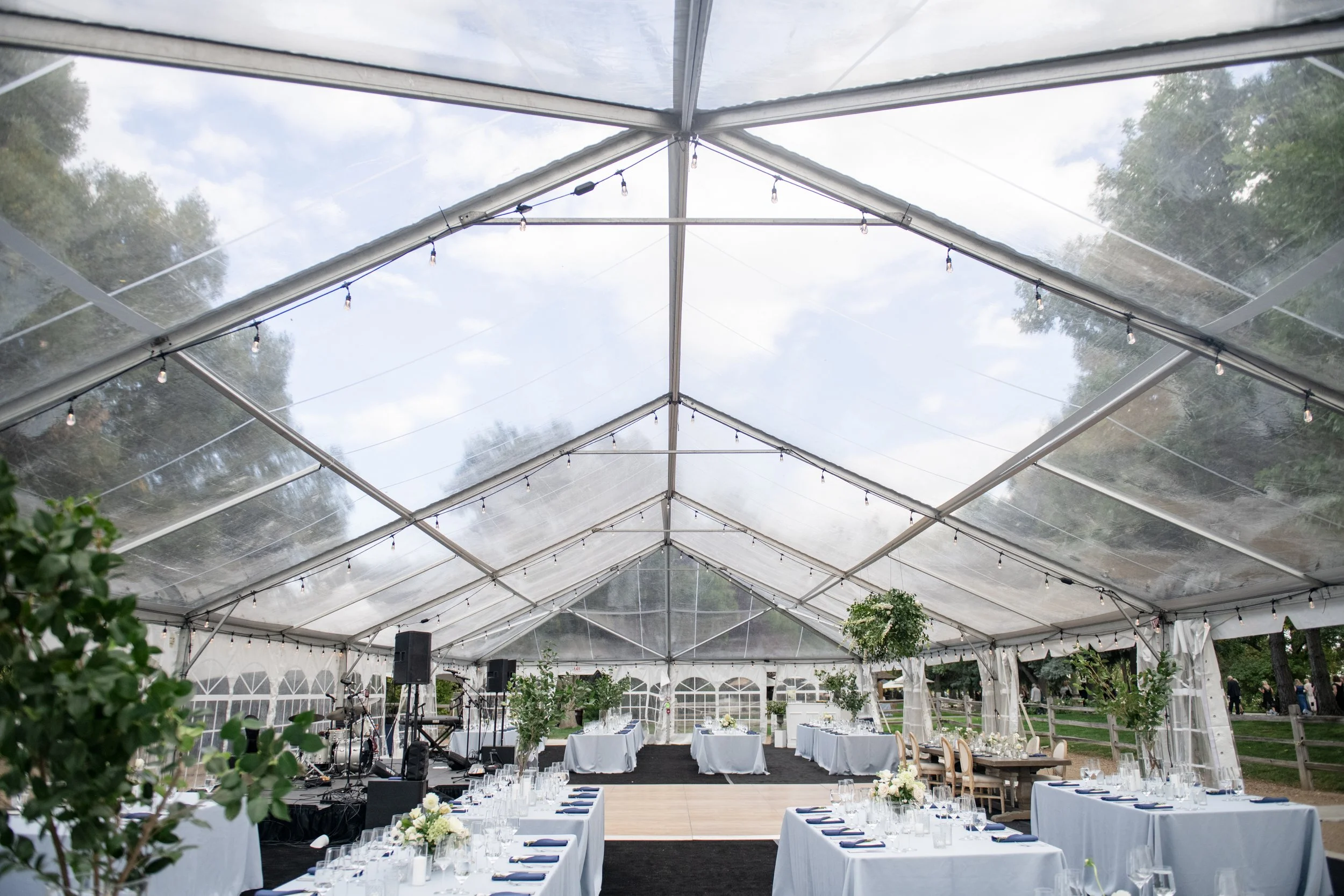
A clear-top tent for a private estate wedding. Photo by Lillie Elliot Photography
Rather than viewing a wedding budget as a list of vendors, it is more accurate to see it as a system. Each component supports the others, and together they create the guest experience.
While allocations vary, luxury wedding budgets often break down as follows:
Hospitality & Catering (40–50%)
Food, beverage, service staff, rentals, and overall guest hospitality. This is typically the largest investment because it affects every guest for much of the day.
Physical Environment & Infrastructure (20–35%)
Venue fees, tenting, flooring, lighting, power, furniture, restrooms, and other infrastructure required to make the space functional and comfortable.
Wedding Design & Visual Identity (15–25%)
Floral design, tabletop elements, linens, custom installations, and cohesive visual details.
Photography & Videography (8–12%)
Professional documentation that captures the day with care and artistry.
Entertainment & Atmosphere (5–10%)
Music, sound, and experiential elements that guide energy and pacing.
Planning & Production Oversight (10–15%)
Wedding planning, coordination, and production management that ensure every element works together smoothly.
These ranges are guidelines, not rules. They help explain where investment typically flows in a well-executed luxury wedding.

Where Couples Commonly Underestimate Wedding Costs
Even prepared couples often underestimate expenses related to:
Setup and breakdown labor
Rehearsals and pre-event logistics
Rentals beyond basic tables and chairs
Transportation and restricted load-in requirements
Power, lighting, and weather-related infrastructure
Permits, insurance, and venue-specific compliance
At this level, these elements are essential. They are what allow the celebration to feel calm, polished, and thoughtfully executed.
Photo by Carrie King Photography
How to Budget for a Luxury Wedding
Rather than asking, “How much should we spend?” a more effective approach is to ask:
What do we want our guests to experience throughout the day?
Where do comfort, flow, and quality matter most?
Which elements shape the entire celebration, not just one moment?
When budgeting is guided by experience rather than line items, decisions become clearer and more aligned. The result is a wedding that feels cohesive and generous from start to finish.
What This Wedding Budget Series Will Cover
In the posts ahead, we will explore the true costs behind each major wedding category, including:
Wedding venues and site considerations
Catering and bar service
Wedding planning and production oversight
Floral design and décor
Photography and videography
Rentals and tenting
Entertainment
Stationery and paper goods
Cake and desserts
Each article will explain what drives pricing, where flexibility exists, and how to make informed decisions that support the overall guest experience.
Luxury weddings are not expensive because of a label. The investment reflects the care, coordination, and expertise required to create a one-day celebration that feels beautiful, effortless, and thoughtful.