
What Colorado Wedding Venues Actually Cost — And Why
Most Colorado wedding venues are not traditional event spaces. The appeal is the setting itself: mountain views, private ranches, open meadows, historic properties, and resort environments built into the landscape.
Hosting a wedding in those environments comes with very different logistical considerations than a ballroom or urban venue.
A mountaintop ceremony site, a private ranch, and a full-service resort may all accommodate the same guest count while operating very differently behind the scenes. This is one of the main reasons Colorado wedding budgets vary so dramatically.
At some venues, power, catering facilities, flooring, weather protection, staffing, and guest accommodations are already in place. At others, nearly everything must be brought in temporarily, often within a tight installation and breakdown schedule.
The venue fee itself rarely tells the full story.
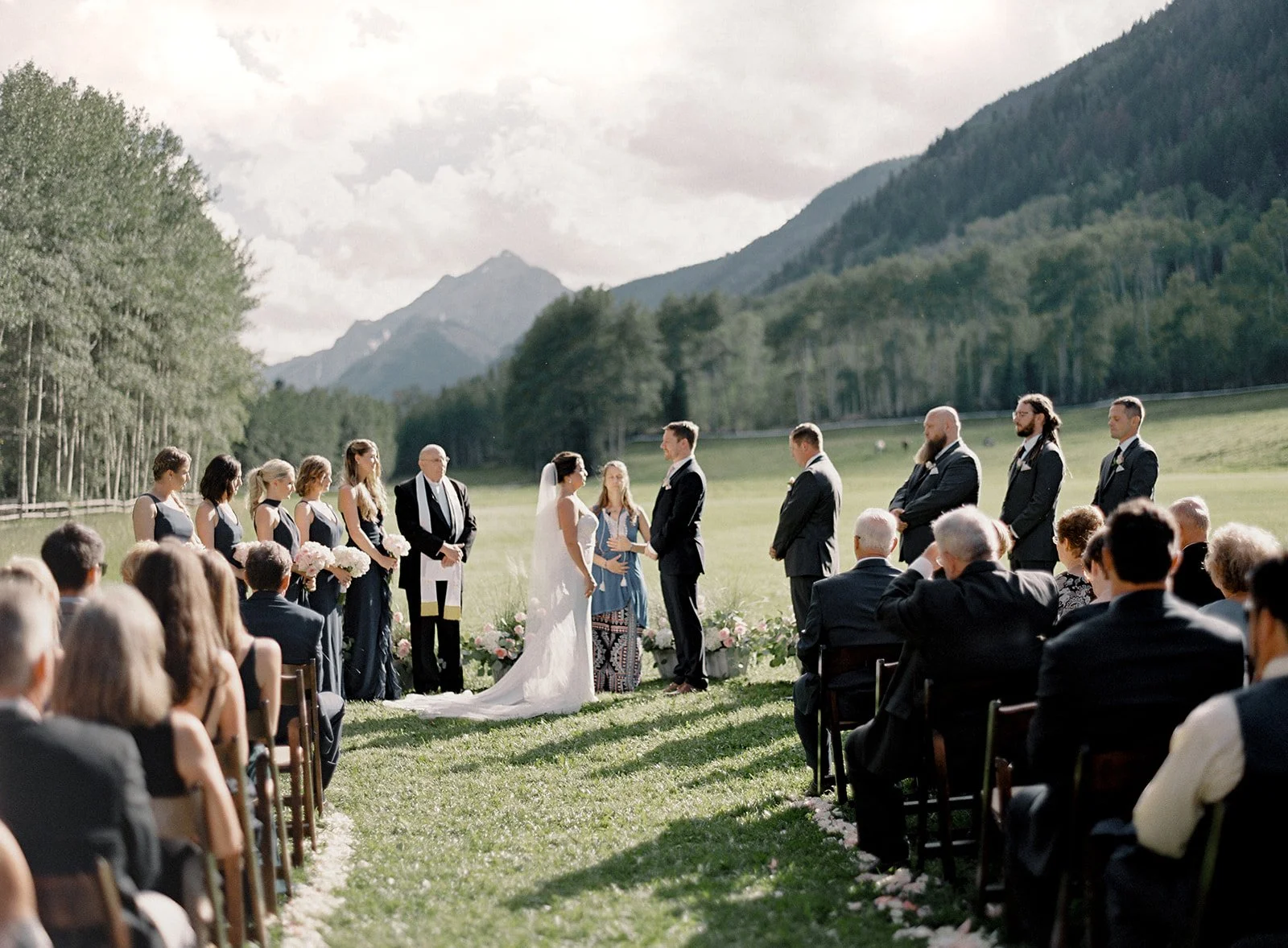
Colorado wedding venues often combine dramatic scenery with unique logistical considerations. Photo by Alp & Isle Photography
What a Wedding Venue Actually Includes
Many Colorado venues are not fully built event spaces. They are properties adapted to host weddings.
At a full-service resort, much of what is needed to host a wedding already exists: commercial kitchens, permanent restrooms, built-in power, furniture, paved access roads, weather-ready event spaces, and hospitality staff already working on-site.
At a private ranch, open meadow, or mountaintop location, many of those elements must be brought in temporarily.
That can include:
Generators capable of powering catering kitchens, lighting, entertainment, refrigeration, and restroom trailers simultaneously
Flooring installed over uneven terrain for dining, dancing, and accessibility
Temporary kitchens built behind tents or inside service structures
Additional transportation systems for guests, vendors, or parking overflow
Lighting installed across pathways, dining spaces, bars, lounges, and tent interiors
Restroom trailers sized appropriately for the guest count and event duration
Multi-day installation and breakdown schedules involving large vendor teams
This is one of the reasons two weddings with the same guest count can have very different overall budgets.
A wedding that feels relaxed and straightforward to guests may require days of installation, transportation logistics, and large vendor teams to execute.
Common Venue Types in Colorado
Colorado wedding venues often look similar in photos. Operationally, they can function very differently.
Two venues with the same guest count and similar mountain views may require completely different levels of rentals, staffing, transportation, installation, and contingency planning.
Full-Service Resorts and Hotels
Venues like The Sonnenalp, Four Seasons Vail, Devil’s Thumb Ranch, and many Vail Resorts properties already operate as hospitality environments year-round.
Commercial kitchens, restrooms, power, furniture, lodging, parking, and service staff are already integrated into the property.
That usually means:
fewer external rentals
built-in guest accommodations
centralized food and beverage service
more weather-ready event spaces
more established service systems
Even within this category, there are still logistical differences. A ceremony at Holy Cross Wedding Deck, for example, still requires gondola transportation, extended vendor load-in schedules, and additional staffing coordination across multiple locations.
These venues often charge higher site fees and food-and-beverage minimums, but many operational costs are already built into the venue's structure.
One of the most common surprises for couples is how quickly service charges increase the overall catering total. At many Colorado resorts, food and beverage service charges are approximately 20–25% and are applied before gratuity. For large guest counts, that alone can add tens of thousands of dollars to the final venue bill.
Hybrid Venues with Partial Infrastructure
This category has become increasingly popular in Colorado.
Venues like Camp Hale, Blackstone Rivers Ranch, T-Lazy-7 Ranch, and Flying Diamond Ranch often include some permanent event infrastructure while still requiring substantial outside production.
A venue may provide:
a permanent tent structure
basic tables and chairs
restroom trailers
limited prep kitchens
onsite venue staff
At the same time, couples may still need to arrange:
outside catering
transportation systems
bars and some additional furniture
additional lighting
generators or supplemental power
weather contingency plans
expanded rentals
These weddings often fall into a middle ground operationally. The venue provides a framework, but many elements still need to be built specifically for the event.
Event Venues Requiring Full Build-Out
Some venues regularly host weddings but provide relatively little beyond the property itself.
Venues like Greystone Castle, Burning Sky Farm, and Copper Bar Ranch regularly host events, but most wedding infrastructure still needs to be brought in temporarily.
That can include:
additional area for a temporary catering kitchen
generators
tenting
bars
furniture
tabletop rentals
lighting
lounge areas
transportation systems
The difference between these venues and a private estate is experience. The property is maintained for events, vendors are familiar with the site, and the venue team usually understands installation timelines, access needs, and production flow.
Private Estates, Ranches, and Residential Properties
Private homes and ranches are often the most labor-intensive category because the property may have never functioned as an event venue before.
Everything begins from scratch.
Depending on the property, teams may need to:
level uneven ground
create parking plans
bring in generators and power distribution
install temporary kitchens
create pathways for guests
mow or landscape areas before installation begins
build full tented environments
coordinate extensive installation and breakdown schedules
These weddings can feel highly personal and visually striking. They also tend to involve the largest amount of temporary production and logistical planning.
Typical Colorado Wedding Venue Cost Ranges
Separate from catering and bar service, venue-related costs are often one of the largest portions of a Colorado wedding budget, particularly for mountain venues, tented weddings, and properties requiring substantial rentals or multi-day installation schedules.
Depending on the venue format and guest count, couples commonly see ranges such as:
Venue site fees: $15,000–$50,000+
Tenting and flooring: $25,000–$75,000+
Lighting and power distribution: $10,000–$30,000+
Restroom trailers, heating or cooling, and additional rentals: $5,000–$40,000+
A Real-World Example: Holy Cross Wedding Deck
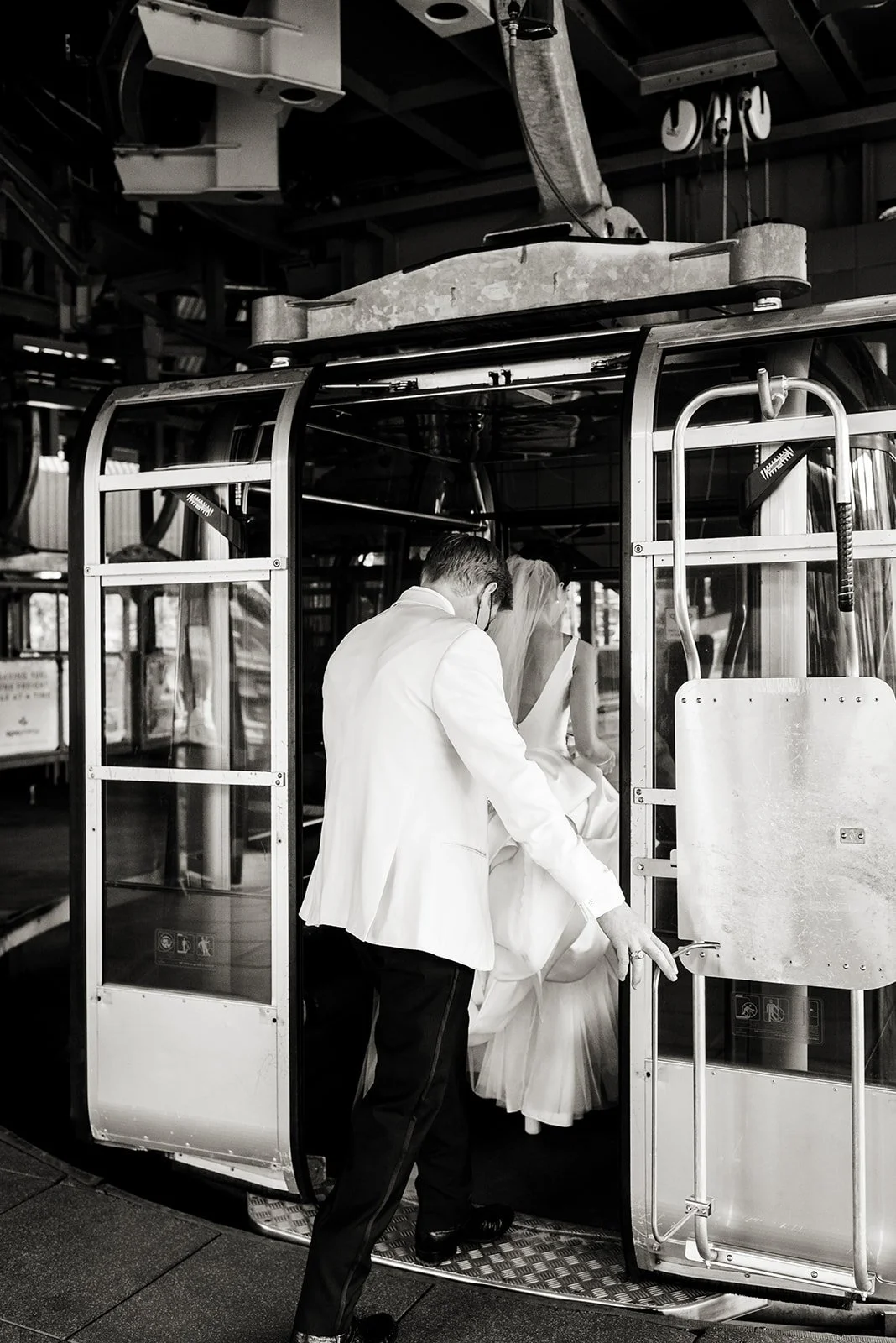
Mountain wedding venues often require transportation coordination for guests, vendors, and event production teams. Photo by Rachel Schrepel
Holy Cross Wedding Deck is one of the most recognizable ceremony locations in Vail. The views are extraordinary. Logistically, it is also one of the clearest examples of how mountain venues operate differently from traditional event spaces.
The ceremony site itself may appear relatively simple. Reaching it is not.
Hosting a wedding there typically involves:
Gondola transportation for guests, vendors, floral deliveries, rentals, and personal items
Per-guest transportation costs through Vail Resorts for guest counts over 125 people
Extended load-in schedules for floral and décor teams transporting materials up the mountain
Additional timeline coordination to prevent guest bottlenecks at the gondola base
Increased staffing, often with planners or assistants stationed both at the base area and at the ceremony deck simultaneously
Even small logistical shifts affect the schedule. A delayed gondola load-in can impact floral installation timing. Guest transportation delays can affect ceremony start times. Vendor teams often begin working significantly earlier than they would at a more traditional venue.
For guests, the experience feels exciting and memorable. Behind the scenes, the amount of coordination is substantially higher than the ceremony itself may initially suggest.
A Different Kind of Venue Logistics: Blackstone Rivers Ranch
Not all Colorado venue logistics come from remote access or gondola transportation.
At venues like Blackstone Rivers Ranch, the ceremony, cocktail hour, and reception spaces are located very close together. Guests do not need to navigate multiple locations between the ceremony, cocktail hour, and reception. Transitions that may take thirty minutes at a mountaintop venue often take only five or ten minutes here. Vendor load-in logistics are also significantly simpler than at a mountaintop venue like Holy Cross Wedding Deck.
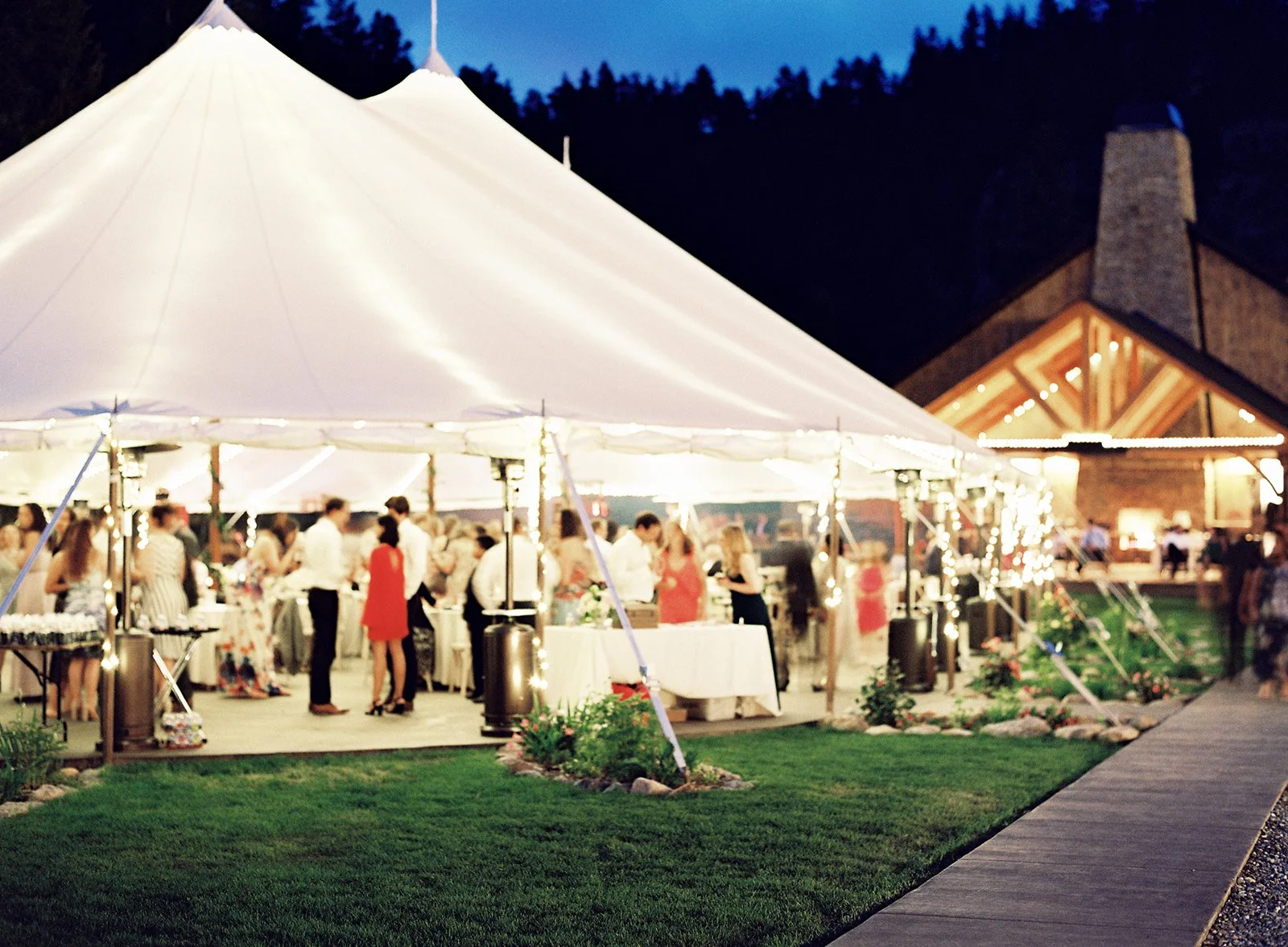
At venues where ceremony and reception spaces are closely connected, production timelines often compress significantly before guest arrival. Photo by Carrie King Photography
That simplicity changes the production schedule.
At Holy Cross, vendor teams can continue setting portions of the reception while the ceremony is taking place on the mountain. At Blackstone, guests often arrive with the tent, cocktail hour, and reception areas already visible.
That means:
reception spaces typically need to be fully set before guest arrival
floral installations often happen earlier in the day
rental placement and tabletop installation timelines compress
planners and vendor teams have less flexibility to finalize spaces during the ceremony window
Neither venue is inherently more complicated. The logistics are simply different.
One venue requires transportation coordination across multiple locations. The other requires tighter production timing because nearly every event space is visible as guests arrive.
How Venue Structure Changes the Overall Budget
One reason Colorado wedding budgets can feel inconsistent is that venues include very different things.
At a full-service resort, the venue contract may also include catering, bar service, staffing, tables and chairs, kitchen facilities, service equipment, taxes, and service charges. At a more open-format venue, many of those same categories are booked separately through rental companies and outside vendors.
As a result, the percentage of the overall budget allocated to the venue category can vary significantly.
Full-Service Hospitality Venues
At resorts and hospitality-focused venues where catering, bar service, staffing, taxes, service charges, and core rentals are largely bundled together, couples often spend approximately 40–50% of the overall wedding budget within the venue contract itself.
That percentage may initially feel high, but it often reflects multiple major budget categories grouped together under one agreement.
Less-Inclusive or Open-Format Venues
At venues where catering, rentals, bar service, power, transportation, and staffing are booked separately, the venue site fee alone may represent closer to 15–25% of the overall budget.
The remaining costs are simply distributed across additional vendor categories rather than consolidated through the venue contract.
When comparing venues, couples should request a realistic total estimate rather than focusing only on the published site fee. Taxes, service charges, staffing, food-and-beverage minimums, transportation, and required rentals can substantially affect the final cost structure.
What Couples Commonly Overlook
Some of the most significant venue-related costs are not always obvious during the initial venue search.
Couples are often surprised by:
multi-day installation schedules
strict vendor load-in and load-out windows
power distribution requirements for catering, lighting, entertainment, and climate control
flooring needed for uneven terrain or accessibility
transportation systems for remote parking or large properties
permit and insurance requirements tied to the venue
taxes, administrative fees, and service charges added after minimums are calculated
These details are rarely the most visible part of a wedding budget. They can still substantially affect the overall cost structure and production schedule.
Looking at the Full Picture
In Colorado, two venues with similar views and guest counts can operate completely differently.
A venue may include catering facilities, power, staffing, tables and chairs, transportation systems, or weather-ready event spaces. Another may provide only the setting, with everything else built temporarily around it.
Neither approach is inherently better. They simply distribute costs differently.
When comparing venues, couples should request realistic total estimates that include taxes, service charges, staffing, rentals, transportation, and any required infrastructure. Looking at the full cost structure early makes it easier to compare venues accurately and avoid surprises later in the planning process.
The more clearly couples understand those differences upfront, the easier it becomes to build a realistic budget around the venue they actually want.
Coming Next in the Series
Upcoming posts in this series will break down additional wedding budget categories, including:
Catering and bar service
Planning and production oversight
Floral design and décor
Rentals and tabletop
Photography and videography